Faith Factor 14 – Good Fight of Faith

Faith is for fighting! In all that we have learned about faith there is the reminder that faith involves a form of contending, or fighting, to see a spiritual breakthrough.

Yes, I have spoken about the “rest of faith”, and that doesn’t sound like fighting. Yes, I have spoken about the rewards of faith. But I have also spoken about the need to “apprehend” and to hold fast to our faith, even when it is being tried and the results do not turn up.

Birth Pangs

At times faith is like giving birth. While the outcome is glorious and makes for an impressive testimony, once everything is over, the actual process of bringing the spiritual outcome to reality can be a protracted labour.

Sometimes we are assailed with doubts and counter arguments, insisting that we should give up our faith or our outrageous expectations. Sometimes we face insurmountable circumstances, expert medical opinions, and obstacles which dwarf the little faith we have.

Holding on in faith, and persisting until we have the victory, can be a long and tortuous battle against unseen assailants, the attitudes and opinions of those around us and our own private insecurities.

As with a natural birth, once the outcome has been achieved, the pain of the process is easily put behind us.

Faith and Trials

It seems that faith needs trials to refine and test its quality. If faith is never tested, then we can never be sure of its durability and value. When faith stands up to the pressure test, heat test, wind and storm test, and so on, then we can see how strong that faith is.

Facing these trials of our faith is part of “fighting the good fight of faith”.

Fight the good fight of faith, lay hold on eternal life, to which you are also called, and have professed a good profession before many witnesses.” 1Timothy 6:12

Facing these trials is also so much a part of the process that the Bible speaks of the “trial of your faith” as it is a natural thing to be expected.

“That the trial of your faith, being much more precious than of gold that perishes, though it be tried with fire, might be found unto praise and honour and glory at the appearing of Jesus Christ” 1Peter 1:7

Refining Fire

When the Apostle Peter mentioned that our faith is “tried with fire” (1Peter 1:7) he was alluding to the process of refining gold and precious metals. Gold is super-heated so the rubbing (dross) will float to the surface to be skimmed off. The way to tell that the gold is pure is to heat it and see that no rubbish comes to the surface.

“The refining pot is for silver, and the furnace for gold: but the LORD tries the hearts.” Proverbs 17:3

God puts you under pressure to see how your heart and your faith will respond. If you have confidence in God you will give thanks in everything. If you have no faith in God you will panic and despair when troubles come. If you can “rest” in God, amid all your problems, then your faith is strong. If you can praise Him despite what you are going through then your faith is strong.

Do not be afraid of the delays, opposition, frustrations and so on, since they give you opportunity to “fight the good fight of faith” and press through to victory.

Remember, you will not be tested beyond what you can handle.

“No temptation has come upon you but such as is common to man: but God is faithful, who will not allow you to be tempted above what you can handle; but will with the temptation also make a way to escape, so you can bear it.” 1Corinthians 10:13

Head For the Red Sea

In my teenage years, as I first came to understand the awesome dimension of faith, I also realised that faith and trials go hand in hand. The Biblical example that impressed me was what happened to the Children of Israel as they moved away from Egypt.

The Israelites had already been set free from slavery. They were made fabulously wealthy with the jewels of Egypt. They walked out of Egypt as the victors. The faith of Moses, persisting in obeying God, despite the opposition of Pharaoh and the Israelites, had won them the victory.

Yet God then led them to the Red Sea. It is understood that the place they found themselves in had the sea in front of them, mountains on either side, and the Egyptians coming after them from behind. However, this was no accident. God deliberately led them there, knowing He would work a miracle to destroy the Egyptians.

The Red Sea also became Israel’s first trial of faith after gaining their freedom. And so, what did they do? They panicked and rose up against Moses. They accused him of leading them there to kill them (Exodus 14:11,12). Moses, on the other hand, was full of faith in God. That’s why I like him as my Faith Mentor. He declared that they would be victorious, even before he knew what God was going to do.

“And Moses said to the people, Fear not, stand still, and see the salvation of the LORD, which he will show you to day: for the Egyptians whom you have seen to day, you will see again no more for ever. The LORD will fight for you, and you will hold your peace.” Exodus 14:13,14

Many Trials

That ordeal at the Red Sea was not the last trial of the Israelites. Many times God tested them, to see whether they would trust Him or not. They needed water at times. They needed food. God led them to places where the provisions were not visible.

If they were full of faith they would have simply confessed their confidence in God to supply their needs. They would have maintained faith that God, who set them free, would lead them all the way to the Promised Land. Each new trial would have had them looking eagerly for the next miracle.

Instead they caved in, accused God, rejected God’s man and proved they did not have faith.

The Heart Tried

The trials of your faith, which you are to win through on, are part of you fighting the good fight of faith. And that good fight of faith is fought in our own heart. It is God who fights with our enemies and deals with our circumstances. That is not our part to do. Ours is to win the battle against our fears, doubts, weakness, and so on.

Moses knew the truth. God does the fighting for us. So, our fight of faith is not against people or circumstances. Our fight happens in the inner recesses of our life, where we choose to “only believe” despite what the report says.

We win the fight when our heart is established in confidence in God’s grace. No matter what people say or do to us, or what the expert prognosis may be, we win when we determine to trust God and stand upon His promises.

When your faith is tried and you continue to trust in God, you develop a divine patience to wait on God. You are not covetous and not impatient or demanding. You trust God and rest in Him.

“Knowing this, that the trying of your faith works patience.” James 1:3

The ancient holy man, Job, won the battle of faith when he said, “Though He kills me I will yet trust in Him!” (Job 13:15)

Your Faith

I cannot have faith for you. Your faith belongs uniquely to you. If I grow in faith, that has no bearing on your faith. You must grow your own faith.

“Be it unto you according to YOUR faith” (Matthew 9:29). It is the trial of YOUR faith that works patience (James 1:3). So, value your own faith and build it strong.

You build up your faith in various ways, and that will be the theme of the next Faith Factor.
Who Are You?

This is not a silly question. It is probably one of the most important questions you can answer. And it impacts most areas of your life. So, I am here to make you think about, “Who are you?”

Since this is a huge subject I will probably come at it several times and from different angles, prompting you to think about something you have already decided is not important.

Why do I do this to myself? Here I am trying to make you ponder something that you have ignored most of your life, even though it has impacted most decisions you’ve ever made. I must be a masochist or something!

Oh well, here I go anyway.

Pick a Label

What words best describe who you are? Before I prompt you any further, take a moment to list three words that describe who you are…….

Now, I’m waiting…..

Don’t keep reading until you’ve picked three labels that describe who you are. Make a mental note, or scribble them down somewhere, because we will probably refer back to them later.

Now, think of the last person you spoke with. It might have been a family member or work associate, or someone who just spoke with you on the phone. Identify who you are going to label. Write their name down, and then list three labels which describe who they are.

A Thousand Brands

Just as there are thousands of brands around the world, for clothing, food, entertainment, etc, there are thousands of labels that could be put on people and that could be attached to you. So I expect that you, my reader, could have come up with labels I have never thought of.

Allow me, then, to give a few examples, even if they are far from what you came up with. Then make a comment at the end of this post, to let me know what you came up with when you started labelling. I’d love to know what you are coming up with.

Possible Labels

You may have labelled yourself based on your gender: man, woman, boy or girl. You may have labelled yourself based on relationships: wife, son, grandad, auntie, etc. You may have labelled yourself based on age: kid, adult, teen, octogenarian, etc. You may have labelled yourself based on activity: uni student, musician, salesman, housewife, consultant, etc, or career: bookkeeper, teacher, businessman, engineer, etc. You may have labelled yourself based on spiritual status: Christian, atheist, new-ager, agnostic, etc. Or you may have labelled yourself by your personal features: hulk, doll, giant, fatso, red-head, muscle-man, Caucasian, etc.

But we’ve only just scratched the surface. You could be a home-owner or renter, an invalid, pensioner, graduate, champion, Liverpool or Dallas Cowboys supporter, soprano, hero, actor, superstar, and so the list goes on.

The Labels that Count

Of all the labels people come up with some are completely unimportant while other impact their whole life. But because people do not know who they are they can spend their whole life distracted by a label that has no significance at all.

In the much loved Peanuts comics by Charles Shulz, popular from the 1960’s, there were several characters who were preoccupied with their meaningless characteristics. Charlie Brown felt like a loser while five year old Frieda was absorbed by her “naturally curly hair”. Meanwhile Charlie’s dog, Snoopy, became absorbed with imaginations about himself as a hero.

None of the labels that distracted these characters deserved to have a lasting place in their lives. And Shulz was pointing out to his audience that being concerned about irrelevant things is a waste of our time and energies.

Do You Know What is What?

If you do not know what the important labels are and you do not know what labels best describe you then you do not truly know who you are and how you fit in the world. You run the serious risk of missing your destiny, ruining things that belong to you and filling your life with irrelevant things.

In the Narnia stories by C.S. Lewis we are introduced to Shasta, a boy serving as a slave. The boy and his master did not know that the lad was a prince and an heir to the throne in another land. The boy could have spent his life as a slave, but that is not how Lewis allowed it to play out.

In the 2008 cartoon movie, Kung Fu Panda, we find a misfit panda who has a vastly different destiny to that imagined for him by his ‘father’. The fat panda could easily have missed his life calling.

In these and a myriad other examples we know of people who wore labels that wrongly described them, or which limited them from their true potential.

Revelation of Destiny

The Bible contains several examples of people who were given a new, divinely endorsed label, which transformed their life.

Gideon was called a “mighty man of valour”, while he was hiding from the enemy.

Peter, James and John were called to be “fishers of men”, while they had only caught fish up to that time.

Moses was called to be a deliverer of Israel, while he was in extended exile from Egypt, doing no more than mind sheep.

Elisha, Jehu and several prophets were called, unexpectedly, from their natural life, to a divine purpose.

What About You?

If God were to speak with you right now, which of the labels you used to describe yourself would He say was the most important? Would He likely have a new and better label for you?

And what about the other person you thought of? What divine label would God have for them? Would He be impressed with the labels you have chosen to describe them?

If God turned up and gave you three completely new labels, wonderful and full of blessing, what would you want them to be? Which labels would you love to have removed from your life?

Who Are You?

Now, I’ve started you thinking, even if only for a moment or two. So, let me ask you again, “Who are you?”

Write a list of five words that describe the Real You.

Write another five words that describe who you are in God’s sight.

Write another five words to describe who you are politically.

Then try another five words that describe who you are in relationship with others.

Then, email those lists to me, so I can see who in the world is reading this to –  chris@chrisfieldblog.com

Oh, and you can put your thoughts as a comment on this post as well.

Rejection 13 – Human Bandage

We move now from the results or impacts of rejection, which the victim has little control over, to the choices and responses which victims make. Rejection needs to be dealt with at two levels. We need to resolve the spiritual and personal impact of what the victim experiences at the hands of others, and the victim needs to undo what they have done in their response to being rejected.

Coping Skills

People have different coping strategies and coping skills for surviving life’s challenges. I heard recently of an African nation where, as a consequence of war and disease, there are families of surviving children where an eleven year old is the ‘adult’ caring for two younger siblings. The survival instincts and coping skills needed in such a situation challenge the understanding of comfortable westerners.

Because people are different and each situation is unique, there are many diverse responses which people create to deal with their problems. What I present in this and the next few lessons are the responses I have seen most often. I see these as the core responses to expect in the life of someone who has suffered rejection.

Ease The Pain

An early instinct, in a survival situation, is to reduce our suffering. We automatically look for ways to ease our pain. We withdraw from the problem or the source of pain, and then attend to our wounds.

A wounded ‘heart’, as we saw in an earlier lesson, cannot be treated in the normal medical facilities which help heal our bodies. We are often left without any real help for dealing with our hurt feelings, confused thinking and damaged internal life.

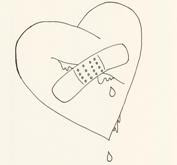
What we do, then, is apply a bandage of our own making. I call this the Human Bandage, and I depict it as a bandage across the open wound in our heart. A bandage on such a wound does not help it heal since we need God’s healing touch to ‘restore our soul’. However, we are usually quick to come up with our own bandages to dampen the pain we feel inside.

Man Made Bandage

It is important to distinguish between a ‘man made bandage’, what I call the Human Bandage, and the divine healing tools which God supplies. The man made bandage is that which comes easily to the mind of people. It does not usually have the divine therapeutic value which comes from God’s ways and God’s word.

I have met many people with their man-made-bandage, who are quite insistent that their own way of dealing with a problem is working. I have found it difficult at times to prompt people to look for God’s full and wonderful healing, because they have been quite satisfied with their own makeshift remedy.

Whatever they have done to cover the wound and numb the pain is their human bandage. It is their attempt to protect their wound from further bumping, and to minimise the pain they feel inside.

Blur Blame and Bluff

Among the coping skill, survival strategies which I have often seen are Blur, Blame and Bluff.

Blur is where a person plays mind games, such as rationalisation, to mollify the sting of what they have been through. They may say, “Everyone had it tough in those days, so I shouldn’t be upset about what I went though.” Or they may say, “Mum was very sick, so I can understand why she was so cruel to me.” This kind of thinking is an attempt to paint over the cracks, but it doesn’t change the fact that real pain was felt and still persists.

Blame involves directing or dumping the hurt and hardened feelings onto someone else. “It’s all my father’s fault! If he had never left us I wouldn’t have gone through all this!” However, the blame game does not bring any healing. It actually nurtures a ‘root of bitterness’, which creates a whole new set of problems.

Bluff includes such things as the simple assertion that “time heals”. Time does not heal anything. Pain may become more buried over time, but it is still there, raw and painful, under your pile of bandages. When someone tells me, “I’m over it now”, I am suspicious. I know that unless someone has actively applied the love and grace of God to their pain they are unlikely to be free.

Distracted Life

One of our tools for dealing with pain and pressure is to bury ourselves in activity. People develop a ‘distracted life’, filled with activities, business, hobbies, parties, relationships, and things that keep them distracted from their past pains.

While this might give the impression they can maintain normal life, their life is not ‘normal’. Their whole existence is one huge coping mechanism. They are not living, but running a life-long strategy. Their work, achievements, busy-ness, social butterfly flittering, intense devotion to their hobbies, and the like, are not what they were created for. Those things have been adopted to smother their pain, not fulfil God’s plan.

Don’t let pain destroy God’s plan for your life.

Proving Yourself

Another coping strategy, human bandage trick is to prove your self-worth. Because rejection attacks your confidence and sense of self-worth it is easy for rejected people to throw themselves into proving themselves, as a way of ameliorating their pain.

If a person can count their achievements, affirm their own worth, and prove that they are not what others think they are then they can blur the feelings of rejection deep inside. Sadly, these achievements do not take away our pain, but they play into our desire to rationalise what is going on. It provides material for our mind to toy with, even though that does not pour oil into our wounds.

Me and My Bandages

I have mentioned before that I had put so many bandages on my own heart they had become a small hill. I tried to cover my sense of internal pain and I was extremely reluctant to ever expose it, even to God.

God graciously assured me that He would not bruise me in the process of healing me. I was comforted by the scripture about the Lord not breaking a bruised reed or putting out the last spark in a smouldering cloth.

A bruised reed he will not break and the smoking flax he will not quench: he will bring forth judgment unto truth.” Isaiah 42:3

Eventually I let God get His fingers under the bottom bandage and pull them off my life. I am ever so glad that I did. He healing in my life has been so wonderful and opened to me a life much more abundant than I ever thought I would have.

Rise and Be Healed in the Name of Jesus

You were not created to be a victim or to live your life in pain. You were not created to be hidden behind a bandage or mask, or to consume your life in survival strategies.

You were created to be hugged by God. You were created to play like a child on the golden pavement before His throne. You were created to bask in the sunshine of His love and to be surrounded by the security and overwhelming grace of His presence.

So, in the lovely and powerful name of Jesus the Christ, the Son of the Living God, I command you to Rise and Be Healed. Walk in freedom, wholeness and transformation, showing to the world the awesome grace of our amazing Heavenly Father.

I command that your soul not only be ‘restored’ (as Psalm 23:3 says) but ‘prospered’ (as 3John 2 says), so you can not only live your life, but amazingly bless everyone else’s too!

Study Skills 3

I am still pushing the importance of paying attention, as I move into lesson three. That’s because the most significant thing you can do to undergird your learning and study is to “Pay Attention”.

The code-word I use for this first of the three keys I am presenting in this series is “Recognition”. Recognition summarises all that you take note of as you give attention to the matter at hand. Whether you are in a lecture, reading a book, researching something or in a group investigation session you can only understand and give attention to things that your recognise.

Can You Hear It?

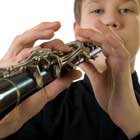
I recall an incident when I was learning clarinet as a young teen that is relevant here. My teacher noted how poor my tone was. In order to help me see the importance of practice and improvement he asked me to play a particular note. I did so. Then he played the same note.

He then asked me, “Can you hear the difference?”

He could tell by my blank expression that I could not, so he had me repeat the process. I played the note and then he played it. Again he asked me, “Can you hear the difference?”

He looked hopefully into my eyes and I so wanted to make him happy. But I could not tell any difference between his playing and mine. I told him so and he slumped in his chair and went back to teaching me something else.

I could not recognise whatever he wanted me to see. So how could I learn or memorise what I could not see. And that same principle applies to you. You cannot learn or memorise something if you don’t even see it in the first place.

Recognise It

When you recognise something you have a chance to get a handle on it, study it, learn it and memorise it. So opening your eyes, paying attention and comprehending what you see is a vitally important issue in your learning journey.

Be attentive to the chance to perceive at a deeper level. If those around you claim to see something you don’t see, jump in and ask them to explain what they see. Be sure to get your eyes open to the meaning, distinctions, discrete elements and relevant issues of the thing at hand.

Bird Tracks

When Austin Henry Layard and other archaeologists first discovered the ruins of ancient Nineveh the sites were pillaged for the valuable and beautiful artefacts. Museums scrambled to get the best items on display.

The sites also contained thousands of clay tablets, but no-one could read them and they were piled in abundance. Those who worked at the sites could not understand the “bird tracks” scratched on the tablets, and neither could most of the experts. So they were treated with disregard before many were shipped back to London and stored in the museum basement.

The man who deciphered the bird tracks was George Smith a self-taught Assyriologist, with a background in engraving. His eye was trained to see minute distinctions and read tiny text. Under his discerning eye the clay tablets yielded their abundant wealth of information.

He could ‘recognise’ what others could not discern. And thus was opened a wealth of knowledge.

Reticular Activating Device

A great tool you have on your side is your brain’s Reticular Activating Device (RAD). This mental facility causes your brain to either notice or discard information.

If you are in the habit of discounting the things you see you have probably programmed your brain to not pay attention. If, however, you have a reason to take note of something, your RAD gives priority to that thing and pays attention to it.

The popular example is that when you buy a car you suddenly notice all the other vehicles of the same make and colour as yours. Or when a name is made noteworthy to you, maybe because you have a new friend by that name, you become much more aware of others that have the name. Your brain is switched on to that particular reality now and pays attention to it in a new way.

As soon as you have given mental note to a name, date, design, colour, fact, or whatever, your brain will signal you when it crops up again in your field of attention. The brain begins to pay particular attention to whatever you have so programmed, even though you are not consciously looking for it.

Program RAD

Since the RAD is so powerful you are wise to use it to your advantage. You can do that by programming it to look out for key things. This is a great study tool.

When you introduce a new concept or element into your thinking your brain puts that thing onto its scanner and alerts you to its occurrence. If you are a poor student, who does not pay attention and does not make mental note of things, then the RAD is operating in a fog.

If you are a disciplined thinker and make mental note of the new bits of information being given to you, taking care to “recognise” them and their significance, then your RAD is well primed to be attentive to that thing.

If I spent time with you pointing out how often different news services give reports of the same event each day that are contradictory to each other I could probably activate your RAD, so that you notice them yourself. If I do not program you to recognise that happening then your mind will blur it over and not see it happening, even before your very eyes.

So, look for ways to get your RAD working for you. Program it effectively and get your sensory perception on side for your study and learning experiences. Activate your ability to be attentive to things you previously missed.

Mental Focus

Attention is the heart of learning and study. It is your mental focus. Don’t blame the teacher or the text book if you do not have the ability to pay attention and focus your mind.

It is up to you to be aware of what is going on around you and in you.

In the 1970’s someone popularised the saying, “Be Alert! The world needs more “Lerts”! That stupid saying attempts to address the very issue I’m pressing on you here. You must give mental focus to your whole life. If you are not good at that, then today is the time to make the change.

Attach Understanding

My Kiwi friend Sam gave me a great example of how attaching understanding transforms our ability to recognise and remember information. Sam’s Swiss surname was hard for most English people to cope with. The name is Abplanalp. Just seeing the written word was enough to have people pausing.

Sam developed an effective way to get people comfortable with his name. He told the story of the origin of the name.

Sam explained that in the Swiss Alps there are places where large elevated planes have formed high in the mountains. Homes and villages grew there, and that is where his family lived for centuries.

People who came from these alpine planes were given the name that means ‘from the plane on the alp’. In Swiss that is, “Ab” (from) “plan” (plane) “alp”, Abplanalp.

From that moment on I found Sam’s name a piece of cake (so to speak).

Build Your Vocab

A final suggestion on this first key of Recognition is that you build your vocabulary.

Vocabulary expands our awareness and increases our powers of discernment. If we do not have words for things then we very likely don’t even know those things exist, so we don’t ‘recognise’ them. By building your vocabulary you introduce new ideas, distinctions and shades of meaning.

Missionaries going to remote tribes in Papua New Guinea found some whose counting went, “1, 2, 3, 4, Many”. Once they got to five they could not distinguish the many. They described 12, 187 and 22,000 with the same word, “Many”. A limited vocabulary means that an abundance of distinctions are lost to you.

Do you talk or mumble? Are you grumbling, mumbling, whining, whimpering, whispering, wailing, rasping, raving, rambling, reminiscing, responding, reacting, reiterating, berating, bellowing, bragging, boasting, belittling, explaining, expounding, expositing, exploding, confusing, corroborating, crowing, or clowning around? All those various shades of meaning and significance rely on the meanings of those different words. The word “talk” does not do justice to the many possibilities.

Pay Attention

In case you missed the point of these first three lessons on Study Skills, you need to PAY ATTENTION. Develop the ability of Recognition, with your mental antenna twitching and taking note of things known and unknown.

Find the meaning, focus on things, expand your vocabulary to expand the degrees of distinction you can make, and Be Alert. Remember, the world needs more of them.

To see the other posts in this series click the links below….

http://chrisfieldblog.com/ministry/study-skills-1

http://chrisfieldblog.com/ministry/study-skills-2

Faith Factor 13 – Seek Him

This series has been building your faith and directing its effective operation, so you can enjoy the awesome things which God has prepared for you. I have shown you that faith is the very substance of things which you believe for, and that God has a storehouse of Grace, filled with unbelievably good things already prepared for you.

I have shown you that faith is the key to that wonderful storehouse and that you are to speak the word of faith to match what you believe in your heart, which is in line with God’s Word.

I have shown you that God is blessed when you step out in faith because your faith pleases Him. And, since it is God’s good pleasure to give you things, and your reaching out for them pleases Him, you can create Double Delight for the Lord by stepping out in faith.

The Focal Point

Where some faith preachers derail their followers is that they become so excited about what faith can achieve in a believer’s life that they fall into one of several traps. One distraction is to become excited about faith, for faith’s sake, putting faith on a pedestal and putting faith in their faith. I have spoken out against this several times already.

Another trap is that covetousness creeps in and the believers begin to think about what they can get out of God, through exercising their faith. This leads into the “prosperity gospel” and “blab it and grab it” mentality which has developed in some places.

Covetousness is an expression of self-focus, rather than focus on God. If you are concerned about what you can get for yourself, then you are not living your life sacrificially for God’s glory.

I need you to see again that God is the absolute and ultimate focal point of our faith. We are not to become distracted by faith or by what we can get by using faith. We are to remain totally committed to and devoted in service to God.

It’s About Seeking Him

Let me take you back to the definitional verse I use as the basis for this study series. It is Hebrews 11:6, from which we discover that faith pleases God and that faith is the combination of believing that God “can” and that God “will” bless us.

“But without faith it is impossible to please him (God): for he that comes to God must believe that he is, and that he is a rewarder of them that diligently seek him.” Hebrews 11:6

Notice those words highlighted there. God is a rewarder of those who “seek Him”. Faith works when we are not seeing faith or the goodies faith can bring into our lives, but when we are seeking God!

Seek Him, or you will end up seeking the faith to get the outcomes you want. It’s about Him, not You!

It’s All About HIM

Do not seek the outcome which faith can open to you. Do not seek your own personal advancement or aggrandizement. Do not seek to finally prove yourself, get the things you have always wanted, set yourself up for life, or any other self-interested outcome.

Seek Him and Him only. Your “reward” is not found in the material outcome, but in Him.

While your heart might seek wealth, security and comfort, think about this. If you get some material advancement, but miss out on getting God, you have come up empty. The material advantage will slip away, and you will be left with nothing.

If you are seeking “Him” then you will have the most wonderful riches of all. You will be blessed with “all spiritual blessings” in Christ Jesus (Ephesians 1:3).

He is our life. He is the prize beyond all prizes and the treasure beyond all treasures.

Renounce that Covetousness

If God is not enough for you, then you will die miserable. If God is not a reward in your life, then how can mere material things satisfy you? Your heart is deceptive and desperately wicked (Jeremiah 17:9) and it lies to you that material goods, relief from financial pressure, and similar outcomes are worth more to you than intimate relationship with God. Eve sought something more than her awesome place of personal fellowship with God, and she lost God’s presence, without getting anything of what she hoped to gain.

If you resonate with that, then realise that you have a covetous heart. You have allowed lust and covetousness to wheedle their way into your heart and they are now demanding something other than what God’s Spirit is longing for from within you.

Renounce that Covetousness and clean up your heart. Do not chase that which does not satisfy (Isaiah 55:2). Do you consume the years of your life chasing an illusion. Seek God. Find the treasure that is beyond any attempt to value it.

God is the Reward

God told Abraham that He, God, is a reward of immense proportions.

“After these things the word of the LORD came to Abram in a vision, saying, Fear not, Abram: I am your shield, and your exceeding great reward.” Genesis 15:1

Having God in your life is amazingly rewarding. He is the reward in Himself. If you had a life filled with vain distractions, indulgence and all that your heart could desire, there is no guarantee that you could even sleep at night. Many of those who have the things you are tempted to covet live in fear, torment, shame, emptiness and regret.

Material rewards do not have any of the rich value of spiritual blessings.

Lean Soul

Covetousness will create a famine on the inside of you. When you long for “things” you bring trouble upon yourself and your inner life shrivels up. The love of money is a root of all evil (1Timothy 6:10). Those who are keen to become rich pierce themselves through with many pains (1Timothy 6:9).

“But they that will to be rich fall into temptation and a snare, and into many foolish and hurtful lusts, which drown men in destruction and perdition. For the love of money is the root of all evil: which while some coveted after, they have erred from the faith, and pierced themselves through with many sorrows.” 1Timothy 6:9,10

When the Israelites longed for the things their soul craved, they demanded it from God. God gave them what they wanted, even though it was not good for them. The result was that the people’s soul’s shrivelled and became “lean”.

“They soon forgot his works; they waited not for his counsel: But lusted exceedingly in the wilderness, and tempted God in the desert. And he gave them their request; but sent leanness into their soul.” Psalm 106:13-15

If you take faith as a spiritual tool you can use to get what you want you will be sending a famine into your soul. Seek God, or end up empty and filled with regret.

Distracted by Him

Rather than being distracted from your spiritual life because of things which you lust for, it is far better to be distracted by God from your material life. Seek God. If you do not have it in you to seek God, then seek to have the will to seek Him.

You could even pray a prayer like this, ….

“Lord God, I know I should be seeking you, but I can’t get excited about doing that. I want to value you above everything else, but I am distracted by things which my heart lusts after. I ask You to invade my life and arrest my senses. Bring me to the place where I long only for You and can find all my fulfilment and blessing in being totally distracted by You. Please come and rescue me from the weakness and failure of my own human heart. I ask this in Jesus’ wonderful and powerful name, Amen”.