Cracks in Australia

Following my article “Cracks in the Public World” I point now to several cracks in the public world that we know of as Australia.

Recognising and challenging these cracks is important for those who are being attacked by wrongful use of authority or by the unlawful intrusion of the public world into the private lives of people.

I write these thoughts to assist the many Aussies who have contacted me regarding abuse they are suffering at the hands of the courts and corporations in Australia, often in connection with bank lending.

By What Authority

Anyone claiming the right to exercise authority over you must be able to certify their authority.  So a basic question for anyone doing anything is “By what authority are you acting?”

Authority issues are usually much more complex than we might initially think.  But they are vital nonetheless.  Just because someone “claims” to have does not mean they truly have that authority.  A suit and badge do not assure authority.  A title does not prove authority.

And authority can be conferred by one person to another, when they do not have the right to transfer that authority.  So sorting out the issues of authority, or jurisdiction, is important.

In courts, the moment jurisdiction is challenged it must be clarified and certified.  While this fact is not always followed (as I found when I challenged jurisdiction before Associate Justice Nemeer Mukhtar in the Supreme Court of Victoria in 2010 and he denied my challenge), it is a matter of law that jurisdiction, or the authority employed by those asserting to have it, must be validated.

Original Authority in Australia

White Australians trace their claim over Australia back to Captain Arthur Phillip, who raised the British flag at Sydney Cove in Sydney Harbour back in 1788, claiming Australia for England.

However that original claim is subject to some doubt.

A limitation on making that claim was that land could only be claimed if no previous claim existed.  The principle of Terra Nullis applies.  Yet England was advised that the natives around Sydney did have a system of recognising land ownership or rights.  So Australia did not truly qualify as terra nullis.

Then we have the problem which Mark McMurtrie points out about the Crown being refused permission to claim any lands in the Pacific, which is where Australia is located.

Is the original claim on behalf of England a lawful claim?  There are serious questions about that.  That suggests some serious cracks in the public world of Australia.
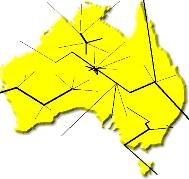
Australian Constitution

The Australian public voted to create a Commonwealth of Australia governed by an Australian Constitution.  So the basic legal authority for Australia as a Commonwealth is the Australian Constitution.

All officials and processes in Australia are bound by the Constitution.  Yet today most of the government and judicial processes in Australia are in contradiction to that Constitution.  This is a gaping crack in the public world of Australia.

Whitlam and the 1973 Styles Act

In 1973 Prime Minister Gough Whitlam foisted on Australians the Royal Styles & Titles Act 1973 (Cth) which cleverly undermined the Australian Constitution by unlawfully replacing the lawful elements of our existence as a Commonwealth with a set of token elements that have no lawful basis.

The Australian public created a Commonwealth of Australia, under the Crown of the United Kingdom, governed by a Parliament of the Commonwealth of Australia, with a head of state being the Governor General of the Commonwealth of Australia.

Those entities cannot be changed without the majority of Aussies in all states agreeing to make changes.  Yet Mr Whitlam unlawfully replaced those things with Australia, the Queen of Australia, the Parliament of Australia and the Governor General of Australia.

While those new names sound fine, they have no lawful authority.  And by that switcheroo (substituting an unlawful non-entity for the real Commonwealth of Australia) a de-facto, illegal corporate reality has stolen Australia from us Aussies.

For more on this check out my summary at Your Stolen Wealth Exposed, http://chrisfieldblog.com/2011/05/07/stolen-wealth

The abduction of our Constitution and the imposition of unlawful corporations is a gaping crack in the public world of Australia.

Australia Act

In 1986 Prime Minister Bob Hawke presided over another shock wave through the public world of Australia, known as the Australia Act.

The Australia Act seems to be little understood but its significance is dramatic.  Simply stated, the Australia Act 1986 dissolves the States and brings all government under the central Federal government.

While the full implications have never been tested in court, and most politicians are unwilling to go anywhere near explaining the true implications of this act, it is quite reasonable to argue that everything in Australia which springs from any State or Territory government is null and void.

That means the corporations registered in any state and the orders of any state court, as well as the state officials and registration of all lawyers are without lawful authority.

Thus the Australia Act has created some gaping cracks in the public world of Australia.

Powerless Local Councils

A further problem is that supposed authority has been given to parts of the Australian government system without lawful right.  So our local councils now act as if they have the right to tax people, through rate charges, and to regulate people’s activity, when the Australian Constitution and the Australian public have denied those rights to councils.

So here we have an example of authority exceeded.  And the same is true for police giving you an on the spot fine.  That is unlawful.  And the traffic courts in Australia provide fines in abuse of the correct judicial processes defined in the Constitution.

These various processes are ultra-vires (outside of true authority) and they are gaping cracks in the public world of Australia.

Complicit Treason

When you and I try to challenge some of these aberrations and cracks in the public world we come up against courts and politicians intent on maintaining these unlawful processes.  Thus we have treason going on.  And various parties are agreeing to work together to maintain and protect the things that are wrong.

Note that the negative impact of the 1973 Royal Styles & Titles Act has never been corrected, by politicians of any persuasion.  Courts act as if all is perfectly fine.  Our current Governor General and Prime Minister were not sworn in by the lawful oaths, and so they are not even holding true office.  Yet no one with power do anything about it seems to care.

And note that the implications of the Australia Act 1986 have not been properly investigated or the Australian public asked to pass new laws to clarify how we want our nation to operate.

Instead it is as if those in power, the “powers that be”, want us to give them freedom to do as they please, no matter how far it is from lawful authority.

What to Do

In view of what is going on in Australia, allow me to repeat what I advised at the end of the previous post on this topic, “Cracks in the Public World”.

Don’t allow any public official or public process to operate outside authority.  Don’t allow any public office or public process to abuse due process.

In a democratic society, the public world is accountable to the people.  So it is up to the people to keep an eye on their public servants and keep them in line with the limits of their authority and the lawful processes they are to follow.

Find the Cracks

Your best defence against abusive public officials or intrusive public process is to challenge the cracks in the public world.  It is easy for the public world to get out of step with its authority and the due process of its system.

All such failure of the public system invalidates its actions and the officials who are out of authority or abusive of due process.

It is an absolute must that you keep the public world to its own limits.  Otherwise the system will abuse you.

Words That Control Us 5

We now know that words impose themselves upon us and that we are wise to be attentive to them and how they impact us.

We are now ready to consider the experience of having words thrown at us that we might wish to reject.  The ideal is to be able to recognise words and what they represent, so we can instinctively deflect any unwanted impact.

Playing Rugby


A friend suggested to me a simple description of the clash of jurisdictions.  We know that jurisdiction is the “right to speak” and we also know that certain environments impose constraints upon us.  For example, courts are places where we are expected to accept the authority of a judge and allow him or her to exert certain jurisdiction over us.

The example of the clash of jurisdictions that was suggested was the idea of a group of people happily kicking a rugby ball.  Imagine that you are one of them and you all enjoy chasing, kicking and catching the ball.

However, on one occasion as you run to catch the ball, you manage to grab the ball and pull it to your chest.  But as you do you immediately hear someone blowing a whistle.  You look up to see a red faced referee shouting at you that you have broken the rule.

Bemused you try to work out what is going on.  The man informs you that he is a soccer referee and you are not allowed to handle the ball.  You innocently shrug and explain that you were not playing soccer.  However, since he has the whistle, a badge, a flag to wave and a bunch of others standing around him who take him very seriously, you are not in a strong position.

The referee then begins shouting orders.  You must drop the ball, change into the right boots, get “on-side”, have a number on your back, know your position on the field, report to the bench, etc.  You try to argue about the rules of various games, but he is insistent and he is ready to have men escort you to the sin bin.

This is what happens when there is a clash of jurisdictions.

Extricating Yourself

When someone begins to impose their “overlay” of perceived rules onto you, it is important that you know how to extricate yourself.  You need to get out of the grip of the unwanted referee who is asserting himself over you.

Arguing the laws of soccer or rugby puts you in argument and the ref is not going to be impressed, nor will he want to be shown up by you.  The angrier he gets the more likely he is to overstep his bounds, when he has no rights in the first place.

Now, this is an allegory for such things as being pulled over by a policeman, accosted by some official knocking at your door, receiving a letter from the court, and so on.

In the many situations where someone is imposing their will onto you think about what you need to do.

Know Where You Stand

The first thing to determine inside yourself is where you stand.  If the referee has true authority over you then the referee has true authority over you.  Does he?

If he does not have authority and you then let him have authority, then he has authority, by your acquiescence.  Have you given him that authority?  Did you acquiesce to him? If you gave away your sovereignty, how do you get it back?

Knowing where you stand is the matter of “standing”.  Do you stand completely independent of all authority?  On what basis can you stand in such a place?  What higher authority do you appeal to that gives you any right to stand anywhere at all?

If you claim to stand under God is that just a fake claim, or do you know what God’s Word and Will is and have you truly submitted yourself to that word and will?  If you are claiming to stand in God-given authority but your life is an offence to God, you have no true standing.

Take Your Stand

Once you know where you stand then do all you can to take that stand.  The Apostle Paul put it this way about 2,000 years ago: “When you have done everything you can to stand, Stand!” Ephesians 6:13,14.

This means you resist the overlay of other people’s words and impositions.

You don’t have to be aggressive or belligerent in doing this.  The polite way to do so is to give Conditional Acceptance and to ask questions.

When someone asks, “What is your name?” you may reply by asking, “Who is asking for my name?”

You can then follow with: “What is your name?” “What is your purpose?” “Is there a problem?” “Do you have some claim against me?”

You can also let them know that you do not acknowledge their authority by saying something like, “I do not recognise you.” This tells them that their claim to authority is not registering on your radar, and it tells them that you are choosing not to defer to their claim of authority over you.

Stay Private

Governments, officials, police, courts and so on, are overlays.  The men and woman who hold official office and titles, such as policeman, judge, etc, were born naked and will take nothing with them when they die, just like every other man or woman on the planet.

So their official status is an “overlay”.  It is not inherent in their DNA or their natural existence.

So we separate the natural reality of flesh and blood men and women enjoying their natural existence, from the artificially created imposition of the world of fiction, created by words, labels and overlays.

The natural world is referred to as your “private” existence.  In that existence you have great freedom to enjoy life.

The fictional overlay that is superimposed over natural men and women is the “public” world.  In that world you are trapped by various rules and regulations, constraints, impositions, etc.

If you are living in your private existence, and can “stay in the private”, you are not subject to the impositions of the overlay.

Do Not Contract

When you defer to the artificial, fiction overlay of people’s words, titles, and so on, you effectively enter into contract with those things, that they are real and have power over you.  It is like accepting the demands of the official soccer referee when you were only having a kick around of rugby with your friends.

Do not enter into such contract. Step away from such offers of contract, either by conditional acceptance (I will listen to you once you prove you have right to impose your rules on me when I am not in your game), or by letting them know you do not “recognise” them.

That’s where the “Return to Sender” process, linked to a notice of “No Contract”, fits in.  When you get an official letter and you return it because you do not have contract, you have deflected its impact.

However, if you are part in contract and part out of contract you will get tangled up and end up in trouble with that angry referee.  So be quite clear where you stand.

Words To Live By

Life and death are in the power of the tongue (Proverbs 18:21).  And if you think about it there is no more authoritative voice in all eternity than that of our creator.  So the Word of God is living and powerful and brings life like no other word can.

You are living by words right now.  The Word of God sustains everything (Hebrews 1:3).  But you are also living by other words too.  Some of those words have brought life and some have brought death to you, in the form of limitation, cutting off your freedoms, and so on.

Now that you know much more about the impact of words I encourage you to search out words worthy of your creator and your eternal destiny.  Seek the good words to live by.

And while you are finding the right words to govern your life, be sure to words of life into others.

And may this exploration of words that control us bring you into new freedom and blessing.

Words That Control Us 4

We have seen that words have impact upon us and we can respond to attempts to gain control over us by various means.

Before we finish with this subject we need to consider how words impact us and what that might mean for us as we seek to remain free from their grip.  We can deflect people’s attempts to control us, but sometimes words invade our heart and mind with pervasive power that we cannot easily shrug off.

Map Overlay


If you have used a map program on your computer you know that you can click on and off various overlays.  For instance, you can have the map as a satellite image, with no roads, towns, borders or the like marked.  That, at the click of a key, an overlay of street names, town names, borders and boundaries and such like can instantly appear, superimposed over the image.

Now consider the significance of that for a moment.  The names and boundaries are not part of the natural landscape.  Whatever name you give to a road it is much like all the others in its vicinity.  The name is only a descriptor, not a component of the natural environment.

Some roads are called such things as “the mountain road” and everyone knows why.  Similarly the low road, the back road, the river crossing, and so on, have a natural element to their name.  But in London stretches of road will famously change name every kilometre or so, completely confusing anyone who does not know their way around.

The name or a road or town is an “overlay”.  And so too is the border between one county or nation and the next.  They are the product of words that impose a mental projection over the natural environment.

Living With Overlays

Whether you like it or not your whole existence is under siege by overlays.  The name your parents gave you, like the expectations of those around you, has been embraced into your life without natural reality.  And to show the point, consider how many people live with a pet name which is unrelated to their given name.  Which name is the right one?  Both are a projection over the natural life.

Impressions people have of you, including their prejudices for or against you, have profound impact on you.  Yet they are an overlay.  You were not born to be oppressed or limited by someone else’s opinion of you, nor to be chained by their words.  Yet many people end up imprisoned by the words of others.

I know of multiple examples of people whose lives were driven by a need to prove their intelligence, talent or significance, because at an early time they were sneered at because of a perceived limitation.  The urge to “prove yourself” is widely felt, and it speaks of the fact that an “overlay” has been imposed upon you which you are trying to shrug off.

Overlay or Description

God, as Creator and Lord of all, has the authority to describe and prescribe things.  The Bible gives insight into the various labels which God accepts, such as righteous and wicked, wise and fool, good and evil.

So some labels, or words used to describe us, are true descriptions.  Young, old, male, female, tall and short are descriptors.  But some of these worthy descriptions are open to change, such as from skinny to fat, young to old, brunette to grey haired, and so on.

God can even bring such transformation that a person who is cursed becomes one who is blessed.  A sinner can become a saint.  And, sadly, a righteous person can become wicked.

But, apart from those worthy descriptions which label the truth about us, at least in our present state, there are many “descriptions” which are impositions in themselves.

Fat and Ugly

A Christian minister described his attempts to assist a woman who struggled with self acceptance.  In one discussion with her she blurted out that she was “Fat and Ugly!”

The minister and his wife were shocked by the outburst, as the woman was slim and attractive.  So they investigated why she held such an opinion.  She explained that as a teenager she lived with an aunt who did not like her and with whom she argued.  On one memorable occasion the aunt became angry and screamed at the girl that she was fat and ugly.  The words not only stung, but became a permanent overlay in the woman’s life.

If you have been stigmatised by words, or felt limited by the descriptions injected into your life by others, then you know how words can become an overlay in your life.

Only an Overlay

While we think of a place, street or town in terms of the words we have learned to describe it, others, unaffected by the imposition, could come up with completely different ideas.  Your notions about things are often only an overlay.

What people in Melbourne think is hot weather is considered mild by people living in the north of Australia.  And what seems like heavy traffic to people in a country town is nothing to the intensity experienced in many cities around the world.  The individual perception is a personal overlay.

The suburb that some people think of as “home” is regarded by others as “the slums”.  What some think of as their big house is thought by others to be too small for their liking.

Relabelling

Since words are labels and those labels invade our thinking and become an overlay over our perceptions, relabelling things can be a powerful way to create a new overlay that invades people’s minds and changes perceptions.

Marketing companies do their best to put a good label and a positive spin on their product.  They want to associate their product with words that will invade the minds of the public with positive sentiment.

The arrival of refugees who don’t speak our language and who have strange customs could be labelled as an invasion and offensive against our identity, or an expression of our love and care for those in need.  The label is an overlay that impacts how we respond to the situation.

Sovereignty and Overlays

If you are created by God as a sovereign being, then how many overlays should you allow to entangle your freedom and rob you of the life God gave you?  If you are created equal to all others, how should your respond to labels that deny your equality?

When others impose labels over you that trap you into their claims upon you, denying you the natural life and freedom God gave you at birth, what should you do about it?

You may not be able to change other people’s perceptions, but you can certainly come to your own internal place of resolution about what labels and overlays you will accept upon your life.

Recognising Words

Having grazed widely through the subject of words that control us, the next thing to consider is how to be tuned in to the impact of words.

If we are attentive to the impositions, overlays and controls implicit in the words, labels, assertions and other expressions of those around us, including officials, governments, friends and society, we can hopefully assess and deflect those impositions.  We can even move into greater exploration of who we are.  So that is the topic of our next lesson.

Words That Control Us 3

We have seen how words impose authority over us, rightly and wrongly.

This article explores the options you have in responding to the words that are projected against you.

It may well be that you are rejecting words you should be heeding.  And it is also possible that you are responding to words that you should be ignoring.

Some Words Stick


The Prophet Jeremiah prophesied to the nation of Judah over two and a half millennia ago, almost 600 years before Christ.  Because he warned that King Nebuchadnezzar would make a second attack on Jerusalem and kill the people his message was rejected.

At one point Jeremiah wrote a lengthy prophecy and sent it to King Jehoiakim.  The king listened as the message was read to him, but then threw the message, page by page, into the fire.

The king and the people rejected the message but they could not change its accuracy.  The message was from God, Himself.  Jeremiah spoke with true, divine jurisdiction.  And so the prophesied destruction came, while Jeremiah was locked in the prison and spared from death.

The Word of God is not a word to be rejected no matter how much we don’t like it.  It is God’s living word and it brings about divine outcomes.  When we receive it in faith it impacts our natural life with divine grace.  If we reject it we will ultimately stand before God to accept the punishment for our rejection of truth.

Just as King Jehoiakim could not destroy the word of God, neither can you.  So making your own god or choosing to believe something that suits your sensibilities will make no difference.

Some Words Crumble

Just as Jeremiah’s words proved to be truly from God, other prophets in his day who opposed him gave empty prophecies.  Grand promises of deliverance were given by those who stood against Jeremiah.  Yet it was Jeremiah’s message that proved true.

And that reminds me of the prophecy given by Elisha when the Syrians surrounded Samaria and the people were starving.  Elisha prophesied that food would be abundant and cheap by the next day.  An attendant of the king scoffed at such a preposterous suggestion, but it came to pass.  The words stood true.

The scoffing of the king’s attendant were the words that crumbled.  In fact he was trampled to death in the stampede of people rushing out to the abandoned enemy camp to grab all the provisions left there.

Various Responses

So far we have seen that words spoken to people can be responded to in a variety of ways.

Words can be respected and obeyed, like the man who pulled his car over at the police officer’s demand and had his car commandeered for the policeman’s purposes.

Words can be rejected and thrown in the fire, as King Jehoiakim did to Jeremiah’s prophecy.

Words can be waited upon, such as the warring tribesmen did when Mary Slessor sent her nonsense message cloth.

Words can be deflected by responding with questions to challenge the jurisdiction of the one asking.

Words can simply be ignored, as many people do who have a copy of the Bible and never read it or attend to what it says.

Return to Sender

John Harris of the People’s United Community in the UK (tpuc.org) recommends that people simply return official documents to the sender.  John initially advocated writing “RTS” on the envelope, but subsequently recommended writing “No Contract. RTS”, or “NCRTS”.

Others suggest returning official letters with a stamp or sticker affixed, so you are not putting your own handwriting on the document.

John Harris points out that if you do not have a contract with these entities and they are trying to impose their will on you, you can simply send their attempts back to them, unfulfilled.

By returning the mail you show that you have not opened or accepted it.  Thus they cannot claim to have some “contract” with you by your acceptance of their documents.

Even if the document appears quite impressive, like Mary Slessor’s wax sealed cloth, it can be sent back without you accepting the imposition of authority by that entity.

Question The Authority

Another approach is to question the asserted authority, to expose its lack of jurisdiction.  This is exemplified in the Roger Elvick questions which he used in court, and which are linked to the Toothpick Story mentioned earlier.

The three questions Roger Elvick used to respond to a judge trying to impose authority over him are:

What is your name?

Do you have a claim against me?

Do you know anyone who does have a claim against me?

The 1215.org site suggests that the judge or official, such as a police officer, will remain silent.  That silence is taken as acquiescence or default agreement and confirms that there is no claim against you.  The site claims, “if somebody fails to respond or is standing mute it literally means you are in control and they are waving their rights.”

So you then discharge the matter.  In court Roger Elvick would say, “I request the order of the court be released unto me immediately.”  When there is no order to be released to you, you say, “It appears as though there is no more public business here. I’m out of here.”

Conditional Acceptance

Rather than rejecting the attempted assertion of authority, it is suggested that we should accept it, on conditions.  An example of this kind of conditional acceptance is seen in the encounter of Jesus Christ with some religious leaders in his day, 2,000 years ago.

The leaders asked Jesus, “By what authority are you doing these things?”  Jesus advised them that he would answer their question if they first answered his.  He then asked if the baptism preached by John the Baptist was from God or from man.

The leaders did not want to answer, as any answer would cause them trouble.  So Jesus also declined to answer their question.  See the historical record at Matthew 21:23-27.

You might respond to a charge sent you by a council or court by saying something like, “I am happy to pay the amount requested upon proof that the claim is lawful.”  This is conditional acceptance of the offer or claim.  But in practice it puts the weight of responsibility onto the other person to prove their right to make any claim.

Asking Questions

In Conditional Acceptance you can see again the merit of asking questions in response to approaches made by others.  The person asking questions is in charge.

Remember the man who was called upon by a policeman to pull his car over.  Rather than object, argue or ignore the policeman, the man simply asked a question: “Is there some problem, officer?”

Think about questions you can ask that do not taunt the other, but put them on notice that you are a sovereign and are not yielding to their demands that your obey them.

However, if the other truly does have authority they have the right to demand a response, as God did when He called out to Adam in the Garden of Eden, and as God did when He challenged Job.

Words That Impose Themselves on You

The next consideration is the impact of words and their magical power to impose themselves and plant thoughts into our hearts and minds.

This is a major aspect of how Words Control Us, and so we will look at that in the next lesson.

Words That Control Us 2

We saw in the first article in this series that people can use words to control us.

This lesson looks at some of the various “words” that impact us and helps us assess which ones we should heed.

Words Control

If someone shouts a command at you and you obey that command then a significant social transaction has taken place.  You show yourself to be under their authority.

Now, someone might call out, “Watch Out!” to warn you of a danger.  Responding to that call does not put you under their authority.  But someone who demands that you do something as they prescribe, such as “Stop!” or “Come Here!” is bringing you under their control by their words.

I recall reading about a man who was driving in city traffic when a police officer called out to him, “Pull over here!” The man simply replied through his open window, “Is there some problem, officer?”

The officer called to him several more times but he did not obey, but simply repeated his question, “Is there some problem, officer?”

The officer soon tired of this and called to someone else, who did pull over.  The officer then commandeered the vehicle.

The man had honourably resisted the control exerted by the policeman.  The driver of the other vehicle did not resist and so came under the officer’s control.

Words Are All I Have

Back in 1968 the Bee Gees released a hit song with the line, “It’s Only Words and Words Are All I Have to Take Your Heart Away”.

And words can at times be all we have.  Yet words are very powerful, as the saying penned in Bulwer-Lytton’s 1839 play puts it, “The Pen is Mightier Than the Sword”.  But this idea traces back to the fourth century Greek poet Euripides who said, “The tongue is mightier than the blade”.

So, while words may seem very lame at times, they are also one of the most powerful tools, or weapons, available to man.  Consider how readily people use them in scoring points against each other, from the children’s playground to the halls of power.

Some Can Speak

I have pointed out in earlier essays on Jurisdiction that God has the ultimate right to speak.  As creator He is immediately and powerfully authorised to speak whatever He will over His creation.  And so the words of God, God’s laws, rule our lives like none other.

Not only can God speak over us, but He gets to identify others who have the right to speak.  God says that husbands speak as the head of the home and that children must obey their parents.  Those who God authenticates are thus able to speak with authority, in fact, with God’s authority, so long as they honour God in what they say.

The schoolyard bully, however, does not have authority.  But then, neither does the teacher!

The teacher does not have inherent, god-given authority.  Nowhere in God’s Word, the Bible, are we told to obey all teachers.  It is up to each student enrolling in the class to submit to the teacher.  If they choose not to do so they will probably be removed from the class.

So, some can speak with inherent, god-given authority (so long as they honour God in their use of that authority), and others have authority because we confer that upon them for the convenience of our circumstances.

Consider, for example, how a child is under the teacher’s authority in the class, but the teacher cannot then invade the family home and usurp the parents’ authority.  The parents have inherent god-given authority, while the teacher has limited authority conferred by the student’s willingness to submit, and limited to a specific place and set of circumstances.

The Toothpick Story

I saw a report of a chap who went to court and defied the court’s assertions of authority.  He had several questions to ask the court which deflected the court’s claim of jurisdiction.  However the chap came undone because of a toothpick. You can find the full account at 1215.org.

“One guy went up there was chewing a toothpick. He knew how to ask the three questions, and he was cruising through them and he got down to the end and then looked a little bit confused as to where to go from there. At that point the judge from the bench said “Take that toothpick out of your mouth”. And the guy reached up with his fingers, took the toothpick out of his mouth, and the judge immediately yelled at the bailiff, “sieze that man and throw him in jail for ten days for contempt”. When he followed the orders of the judge, the judge became the head and he became the tail. What he should have done was continue to chew the toothpick and say, “Do you have a claim against me?”

This toothpick story illustrates the point that when we submit to someone else’s words we acknowledge their authority over us.  If the one speaking has authority then we are being lawfully and duly submissive.  But if the one speaking does not have authority and is trying to exert authority, we are best to deflect the words and not submit to them, or we could be oppressed by their abuse of authority over us.

Responding to Words

A person who is the “head” and not the tail would respond to the attempted impositions from others in a particular way.  They would be free from the imposition.

One way to be free from attempted impositions is to ignore them.

Recall the account of Mary Slessor, the missionary in West Africa who sent a home-made cloth document to two warring factions, instructing them not to fight until she had arrived to explain the significant message contained on the document.  Mary was asserting her intervention.

The warring parties could well have rejected her imposition.  They could have thrown her cloth into the fire or sent it back to her.  It had no inherent power of itself.  The only reason it had influence over them was because they allowed it to have such influence.  And, of course, there was the moral conscience of the men and Mary’s prayers for them.

Similarly for Gladys Aylward, the wild-eyed murderer could easily have cut her to pieces.  Her presence awakened the conscience and brought God’s grace into an otherwise godless situation.

Your Responses

In the next lesson I will explore the options you have in responding to the imposition of words into your life.  You may be rejecting words that you should heed.  And you may also be responding to words that you should ignore.

Words That Control Us 1

Those who control us do so by “Words”.

This series of articles walks you through an understanding of the Words that Control Us and what we can do about it.

This first lesson looks at the fact that Words impact us.

A Shout

The Deputy Headmaster at my high school (St Marys High – not a Catholic Girls School as some thought) was Jack Curry and he loved to catch people off guard with his shouted cry “You Boy!”

Just about everybody in earshot would freeze when they heard that distinctive, commanding call.  We would all turn around to see if “Curry”, as he was called by the boys out of earshot, was calling to us or someone else.  It was always a relief to realise he had someone else in his sights.

Occasionally the senior boys would mimic the “You Boy!” call, first creating a shock, then a chuckle as people realised it wasn’t Mr Curry.

Jack Curry was promoted to Headmaster at a nearby school and we were spared his intimidating call.

Getting Your Attention

If someone calls loudly near us we usually turn around to see if someone is trying to get our attention.

Someone may be calling to us, or to someone else.  So unless we check the matter out we won’t know.

They may be warning us of an approaching car or similar danger.  They may want to get our attention so they can sell us something, as happens when westerners visit some tourist destinations and the sellers want to hawk their wares.  There may be some official wanting our attention, or someone who simply wants to say “Hi!”

When people call for our attention we tend to naturally look in their direction and then assess the situation from there.  We can stop and listen, or walk on and ignore them.  We can heed the warning and adjust our actions as we see fit.  Or we can be completely dominated by the demands of the other person.  It is up to us to decide how to react to someone wanting our attention.

Speaking With Authority

While most of the voices we hear around us are just those of other people with no authority over us, it is possible that the person speaking has some right to be demanding our attention.

We use the term Jurisdiction to describe the right to speak word (diction) that have authority (juris).  The Deputy Headmaster of a school has a lot of authority and speaks with Jurisdiction.  But one of the junior students can be ignored, because they are without authority.

Yet at times a junior student would turn up in a class with a message demanding that some student report to the office.  That demand did not come in the name of the junior student, who was without authority, but usually came in the name of the Headmaster.  If the junior student was ignored then the Headmaster who sent that student was also being ignored, and that was a serious matter.

Someone doesn’t have to possess personal authority to speak with authority, if they are speaking under the authority of someone else.

When I Say “Jump”

Speaking with someone else’s authority is clearly illustrated in the words of a Roman Centurion who history records meeting with Jesus of Nazareth, 2,000 years ago.

The Centurion described his authority as follows:

“For I am a man under authority, having soldiers under me: and I say to this man, Go, and he goes; and to another, Come, and he comes; and to my servant, Do this, and he does it.” Matthew 8:9

The Centurion’s men did exactly what he told them to do, but only because the Centurion was “a man under authority”.  When the Centurion said “Jump” the men jumped.  But that is because when the Centurion’s bosses said “Jump”, HE jumped.

So some voices that call for our attention will be voices with delegated authority, giving them jurisdiction.

Imposing Our Words Onto Others

It is interesting to note that people tend to defer to those who are assertive.  If someone starts to assert their authority or speak in a compelling manner it is likely that a good percentage of people will at least pay attention.

Those of us who are trained in civility, to honour others, do as we are told, respect authority and so on, are highly likely to pay attention to someone who appears to have authority making assertions.

This is the process of imposing words onto others.  Most people do that, even in casual conversation.  Mostly it is an innocent negotiation for the attention and interest of others.

In official matters, however, it is a serious subject demanding our understanding.

Mary Slessor and Words

An amazing example of a person imposing their words on others comes from the legendary English missionary lady Mary Slessor who went to the remote tribes of Nigeria where no white man or woman had been before.

From 1888 she worked with the godless Okoyong tribe which delighted in bloodshed.  She often stood between war parties to stop them killing each other.

Her methodology was to call the leaders of the two fighting groups to account to her the reasons for their arguments.  She would set herself up in the shade of a tree with her knitting, and listen as each side put its case.  Her aim was to keep them talking until they had cooled off or it was too late in the day to do the fighting.  By this means she saved many lives, and did a great deal of knitting.

On one occasion she learned of a fight about to take place at some distance from her.  She cut out a piece of cloth and quickly made various ink markings on it.  She then rolled it up and closed it with a wax seal, giving it the appearance of something very important.  She sent it off by a man who ran to the scene of the fight and presented it to the leaders, saying that the white woman would be along soon to explain the meaning of the mysterious, and obviously important document.

When Mary arrived she unwrapped the cloth and made up her explanation of the random symbols, and thus averted the bloodshed that would otherwise have occurred.

Gladys Aylward and Words

Another feisty English lass who went to remote places was Gladys Aylward who ended up in the mountains of northern China.  On one occasion she was called to deal with a bloody riot in the local prison.  The local mayor and prison commander were terrified and so they demanded that she go into the jail and stop the riot.

She was pushed through a small door which was hastily locked behind her.  She then walked through a darkened tunnel to emerge into the courtyard where dismembered bodies lay about.  A huge man with a blood soaked meat cleaver stood nearby, his chest heaving.  Others were fleeing, crying in pain, or lying dead.

In what became her typical fashion, Gladys scolded the man for his bad behaviour and demanded that the man give her the cleaver, which he did.  Her unexpected appearance and forthright manner quelled the whole drama in a matter of moments.

Yet all Gladys had on her side, apart from her faith in God, was a forthright manner and a bunch of words.

Gladys later used the same demanding manner and calls to people to rally a village to deal with the aftermath of a deadly strike by Japanese war planes.

Imposing Words

In the examples of both these ladies we see the use of words which imposed something over the audience.

Asserting authority and using words enabled both of these godly women to bring about a positive change.  Yet what they were doing involved imposing their will onto others, by their resolute demeanour and their commanding words.

We too are impacted by those around us who use those techniques.  And those techniques are not always used for our good.

People in uniforms or with official positions, using their fancy words on fancy paper, or shouting their commands with an air of authority, can quickly herd people into the responses those people impose.  Yet, like the cloth sent by Mary Slessor, the documents and apparent significance can be completely fictional and of no real substance.

Under Control

You are already under the control of others who have used nothing more than assertion and words to impose their will onto you.

Some of those may have the right to speak.  They may have true “jurisdiction”.  But others may have assumed and asserted control that they do not have.

The purpose of this series is to explore the impact of other people’s words over you and the control they assert, so you can make your own decision about how you respond.

Speaking With Authority

I saw something sweetly tantalising in a familiar Bible text on Sunday. It has to do with Authority which is a bit of a thing with me over the past year or so, linked in to such things as Jurisdiction, personal sovereignty and such like.

What I saw is that authority is directly linked to speaking authoritatively, so that things happen as a result.

Now, guess where I found that in the Bible. It is in a passage that is often quoted in reference to authority – the comments by the Roman Centurion to explain why he was confident that Jesus could heal the centurion’s servant simply by speaking the word.

ClayDetailCenturian

“And when Jesus entered Capernaum, a centurion came to him, begging him, And saying, Lord, my servant lies at home paralysed, grievously tormented. And Jesus said to him, I will come and heal him. The centurion answered and said, Lord, I am not worthy that you should come under my roof: but speak the word only, and my servant will be healed. For I am a man under authority, having soldiers under me: and I say to this man, Go, and he goes; and to another, Come, and he comes; and to my servant, Do this, and he does it. When Jesus heard it, he marveled, and said to those that followed, Truly I tell you, I have not found so great faith, no, not in Israel.” Matthew 8:5-10

Now, in case you missed the salient point let me remind you that this dialogue is about Authority. The centurion is absolutely confident that Jesus has the Authority to heal the sick servant. And that confidence about authority is directly linked in the Centurion’s mind to speaking.

The Centurion is saying, “I know how authority works. When you have authority all you have to do is give a command and it is obeyed. Jesus, I know you have authority so all you really have to do is give the command and the healing will be done.”

As you explore your own authority remember that it is directly linked to your words. When dad gives an instruction to his children or says “No” to their request there is great power in that expression of his authority. When a person who has authority speaks up in a meeting, to raise a question or press a point, the words have effect.

People who don’t have authority are ignored, shouted down, disregarded and silenced. If that is you, then you need to talk with God about what you have to do to recover your personal authority, or the authority of your place (as parent, husband, leader or whatever).

Another key from that passage about the Centurion is that a person has authority not inherently of themself, but because they are “under authority”. The Centurion said “I am a man under authority, and so I am able to tell others what to do.” If you have lost your authority it may be that you need to repent of having rejected the authorities which God has placed over you (your parents, husband, boss, leaders, etc).

I encourage you to discover the authority God has given you, reclaim and heal it if it has been damaged or lost in some way, and then Speak Up! Speak as one with authority, so you can release that authority into those you are responsible for.

The image of Jesus with the Centurion, above is “A Centurion’s Plea” from Clay Illustrations by Georgia Cawley

Authority Confusion

Recent discussion about whether present day Governments can legislate away our long-term rights and such things as our Common Law rights prompts me to discuss “Authority Confusion”, or, better put, “Jurisdictional Confusion”.

An analogy or two might be helpful, to open the subject.

Analogy 1 – The Military Commander

Imagine a Military Commander who instructs his army to invade a particular region and take the cities. In the process a young soldier realises that the region they are invading belongs to the broader realm of the King he serves. He asks his Sergeant to explain what is going on. The soldier is told that the Military Commander decided to bring that region under military control, instead of the King’s control.

The soldier eventually challenges the Military Commander. “Sir, how can we invade our own land and violate our own nation and King?”

The Military Commander explains that the King gave him the right to rule the army and so he is doing with it what seems best to him.

Jurisdictional Confusion

Do you see the Authority confusion there? Can you see the Jurisdictional confusion?

The Military Commander draws his authority from the King who appointed him. He has jurisdiction over the army, on behalf of the King, not independently of the King. The Military Commander violates his own authority, abandoning the right to hold it, once he attacks the very authority who gave him his position and jurisdiction.

Analogy 2 – The McDonald’s Manager

Imagine a man who is promoted to Manager of a McDonald’s hamburger outlet. Once in that position he chooses to change the recipe for the burgers, give free burgers to his friends and add a few home cooked products from his mum.

When the customers and staff ask him why he is doing it he explains that he is the manager now and can do what he likes.

That is ridiculous, because he only has authority as a manager because he is in the employ of the company. Once he mocks the company by abusing the position of responsibility and trust they have given him, he disqualifies himself from the role of manager. He will be sacked.

Conferring Authority

Authority is conferred. The authority of the Australian Government, for example, has been conferred upon it. Centuries of British legal and cultural heritage, with Christianity, the Holy Bible, Common Law, application of Natural and Divine Law, the Westminster System, Imperial Decrees, Maritime Law, and so on, have conferred on the present Government the responsibilities they currently hold. The people of Australia hold authority as the “electors’ parliament” and need to confer their personal vote to a government in order for that government to have authority to govern.

Captain James Cook, operating under Maritime Law, subject to the Crown of England and the British Parliament, anchored in Common Law, based on Natural Law and Divine Law, based upon the Person, Place and Values of Almighty God as expressed in the Imperial Document the Holy Bible (King James Version), provided the basis for today’s Government of Australia.

When a Government violates and rejects the principles upon which that very Government has been established it invalidates itself.

No Government or Parliamentary System can destroy its own foundations, violate the principles on which it stands, or revoke the rights, responsibilities and privileges upon which it is established without making a mockery of its own existence.

Subverting Authority

However “power corrupts” and so politicians and legislators are not above the temptation to distort reality, arrogate privileges to themselves and violate the rights of others. What is happening in modern societies is the assertion of the exclusive rights of the present forms of Government, independently of the basis on which they stand.

High Court rulings, Statute Laws and University text books notwithstanding, reality has not changed. A wrong decision does not dictate a new reality. Foolishness does not destroy wisdom. Lies do not render the truth powerless.

Powerful People

People, who are free indeed, by Divine Law, Natural Law, Common Law and their cultural and legal heritage, should not be fooled by those who tell them that they no longer possess that freedom.

In Australia we also have the Australian Constitution to further affirm our personal freedoms.

And notice what happens each time we are asked to vote. Our politicians come to us hat-in-hand at each election asking us to confer upon them the authority which we hold as Australians. Without our permission they cannot hold office.

We are not pawns of the Parliament, but they are our servants, as their repeated appeals for our votes affirm.

True Freedom

Parliamentarians do not determine our freedoms. Those freedoms are ours from creation and through history. Parliamentarians and legislators can only operate within a narrow margin of function. Any intention on their part to cross those boundaries reveals that they are unworthy of the trust placed in them and are ready to violate the very authority on which they stand.

Basis of Human Law Part 4

In the past three posts on this topic I pointed out various observations from the early chapters of the Holy Bible which have import to the subject of human law. The principles found there provide an important basis for human law.

I have grazed through a number of observations, en route to a picture of our modern legal system and the process of human law. I can’t guarantee we’ll get there, but the journey has been valuable so far.

Review

Before pressing on with more things to observe, it is fitting to take some time to review what we have observed so far. To help harvest some of the insights and their significance for future application I am not only revisiting the content, but grouping it into several sub-headings.

All of these points come from a source that is identified as divine revelation. That is, they were not worked out by human thinking or made up by human inventiveness, but were revealed to mankind by God, Himself. God inspired holy men to write what was impressed to them. At the same time historical records were kept of the events of people’s lives. As centuries passed the collection of holy writings became increasingly potent, because things that seemed of little note when recorded in antiquity became powerfully relevant and significant in later times. Thus a book which was actually written by God was passed to us, and, despite the many contributors over many centuries, we have a book that conveys a unified message from one creative author, God.

So here are the points we have covered so far, from the Biblical text.

Existence

The essence of life is our very existence. But we humans are not the only identities which have significant existence.

God is our pre-existent, sovereign creator. All existence springs from God’s existence from eternity.

Natural law is a product of what has been created by God. It is thus a by-product of God’s existence. To appeal to natural law as the foundational legal reality, without regard for God, is a nonsensical idea. Nature is not the place from which we spring, but a product of God’s creativity, just as we are. It was not made in God’s image, but we are.

Man is a created being, morally accountable to the holy Almighty God.

Man’s existence is a consequence of God’s existence. God exists because He is God. Man exists by the will of God.

Life is impacted by three types of being: God; Man; and the Devil. The devil actively influences people to rebel against God, especially by getting them to reject God’s Words.

Note that the devil is a created being. He was at first an angel created to serve God, but he rebelled against God’s authority and thus awaits his eternal doom. Meanwhile, God allows him to tempt mankind as a means of testing he hearts of men, to find those who will truly submit to God.

Supremacy and Jurisdiction

Law requires courts, judges, rulers and the like. These people have some level of authority over others and some realm of jurisdiction in which their word holds sway.

God is the supreme being and has jurisdiction over the entire universe and all that is known and unknown.

Jurisdiction allows a being to speak over a certain realm with authority. God’s jurisdiction is eternal and unbounded. Everywhere that light can go is within the bounds of God’s jurisdiction.

Because man is under God’s jurisdiction, man is a moral being. Therefore there are moral consequences to man’s moral choices and actions. Man is accountable, not a law unto himself.

Natural Law is not the highest and final realm of law. Divine Law, based on the pre-existence of God, as revealed to us in the Holy Bible, has much greater authority and conveys much more powerful truth than natural law could ever imagine.

God gives assigned roles to people, just as He did in the creation, giving man dominion over the rest of creation.

Man is under direct command from God and must obey God’s instructions.

Man is under moral law, so man is accountable for moral actions, not just natural consequences of his actions.

Superiors have authority over their subordinates, and can command them.

Authority and Accountability

Rules are unavoidable. All of life is governed by limitations. There is no such thing as being a law to ourselves or being outside law.

Those with authority have the right to summons and interrogate those accountable to them.

Those with authority have the right to pass sentence on those accountable to them.

Divine law speaks morality into the world, causing everyone to be accountable, not based on natural endowment, but on moral principle.

Mankind has been created with equality before God and has been given equality of purpose on the earth.

Words

Because ‘jurisdiction’ is the right to speak over a realm, words are very important legal elements. Words control the realm over which they have right to apply. Word usage, definitions and the terms of agreements are very important.

Words are elements for which we are accountable.

Consequences

Actions lead to consequences, both natural and moral. We cannot control the consequences or stop them from happening.

Sin has moral power, causing moral consequences which can be profound and far reaching.

Moral consequences can be experienced at a completely internal level, yet be more real and devastating than actions upon our external body.

Human delusion does not create reality. Man cannot become free from divine morality, no matter what man chooses to believe.

It All Starts with Law

From what we have seen so far, the universe is a law based environment. It is logical that people operate under law, since the very shape of life as it was created is a legal context. A superior Being created people who are accountable to Him.

That Being, God Almighty, determines the roles of man, the standards by which man must live and the consequences for his actions. Thus we have the formula for all legal contexts, where people with authority and position enforce standards that others are to live by, even determining the punishment to be meted out when requirements are not met.

Legal Study

I’d like to suggest that you study law, since we live under law in every aspect of our lives. But that might send you off studying some law course or other that is designed to bring you to a wrong place under man’s impositions. Just because something is called law doesn’t make it true law, as we may see in future posts.

Rather, we need to study the Biblical basis for human law, as I am splashing through it with you, so we see the right responsibilities and accountabilities that God has place upon us.

Basis of Human Law Part 2

In Part One of this series I opened up the subject of Human Law by looking at several important points introduced in the first chapter of the Holy Bible. Since the Bible is the most reliable of all ancient texts, is the most celebrated of ancient texts, has the greatest endorsement and track record of any ancient text and is given full authority within the High Court of Australia, it is a worthy text to address in looking for the basis of human law.

In part two, I look at some other principles which spring from the first few chapters of Genesis. I have long had a high regard for the amount of significant points given to us in just a few chapters of the Bible. These key points undergird the rest of the Bible and our understanding of the whole of human history.

Words

We have already seen that God spoke words which released power. God said, “Let there be light” and the immediate result was that light sprang forth. This ability to speak things into reality testifies to God’s supreme authority and jurisdiction (the right to speak over the entire universe).

Another principle which has significance in law is the power of words. Words and their meanings are a very important aspect of legal business. Definitions, word usage, distinctions of meaning, what is written, what was agreed to, and so on, take up much of the energies of those engage in law.

The Bible endorses the vital importance of words in many places, confirming the significance of referring to this reality in the third verse of the Bible. Consider these other verses.

“And I say to you, that every idle word that men shall speak, they shall give account thereof in the day of judgment. For by your words you will be justified, and by your words you will be condemned.” Matthew 12:36,37

“He that rejects me, and receives not my sayings, has one that judges him: the word that I spake, the same shall judge him in the last day.” John 12:48

“But he answered and said, It is written, Man shall not live by bread alone, but by every word that proceeds out of the mouth of God.” Matthew 4:4

Take with you words, and return unto Jehovah: say to him, Take away all iniquity, and accept that which is good: so will we render as bullocks the offering of our lips.” Hosea 14:2

Law and Words

Much of law is constructed by words and names, defining responsibilities and consequences contingent on the impact of those words. Yet words do not make up moral law. Divine law stands apart from the various laws which people create to serve the purposes of their own society, club or process. We see that distinction in the New Testament, where a Roman official dismisses the Jewish legal complaint as simply a matter of their own words, names and laws.

“But when Paul was about to open his mouth, Gallio said to the Jews, If indeed it were a matter of wrong or of wicked villany [here he refers to moral wrongdoing], O ye Jews, reason would that I should bear with you: but if they are questions about words and names and your own law, look to it yourselves; I am not minded to be a judge of these matters. And he drove them from the judgment-seat.” Acts 18:14-16

Assigned Roles

We saw previously that God gave man dominion, which prescribed a specific place for man. The dominion mandate of Genesis 1:26-28 reveals that positions are God given. God, who is sovereign over all, ascribes to people their place in His created realm.

This ability to assign roles to people is important in terms of human law, because rulers and others who gain authority have the power to make and enforce laws. The validity of their role directly impacts their right to make and enforce laws and the obligation of others to work with or under those laws.

Under Command

In the second chapter of the Bible, Genesis 2, we see another principle of law at work. God imposes moral law onto mankind.

God created a beautiful resort garden for the man to live in. Only the best trees were planted there. Also planted there were two trees of great power. One of those trees, the Tree of Knowledge of Good and Evil, was banned from man. The man was commanded not to eat of that tree or he would die.

“And Jehovah God commanded the man, saying, Of every tree of the garden you may freely eat: but of the tree of the knowledge of good and evil, you shall not eat of it: for in the day that you eat thereof you will surely die.” Genesis 2:16,17

Mankind was not simply given life by God. Man is under command. We are not the free agents which some people want to believe they are. We are accountable to God for our actions. God has prescribed behaviour for us. We cannot do as we please.

Note too, that God’s authority over us places us under moral law. This is not natural law (discussed in part one), but a moral obligation which is independent of the natural considerations. God is a moral being. Man is made in his image, so man is a moral being. God reserves the right, as creator and supreme sovereign, to hold man accountable to moral requirements.

A further legal principle evident here is that superiors have the right to make demands of subordinates. God did not need man’s permission to make demands of man. God is the superior and his right to make demands is simply part of his jurisdiction. The same principle is true for all who have been given authority by God. Note that God is not superior by brute strength. God is the primary cause of man’s existence and is of a nature vastly superior to man’s being. This is not survival of the fittest, but moral order, based on God’s being and His role in the creation of man.

Submission

Note too that rules are a normal part of life. Existence is designed to operate within constraints, rules, moral order and due process. It is not truly possible to live outside of rules and regulation. The very nature itself is regulated and operates according to laws which man has been able to identify, such as gravity.

We must all submit to a range of constraints. We cannot live outside of those constraints – or we would simply float out into space, un-bound by gravity.

However, people seek opportunity to do as they please. This is one of the urges in selfish human nature. We see in history that there were occasions where people did what they pleased.

“You shall not do after all the things that we do here this day, every man whatsoever is right in his own eyes” Deuteronomy 12:8

This may seem a positive situation for those who seek self-will, but we are warned that the consequence of such choices is evil.

“There is a way which seems right to a man; But the end thereof are the ways of death.” Proverbs 14:12

Submission is part of the human condition, but it is something which mankind wishes to pull against – not just against divine authority, but against natural authorities and responsibilities as well.

Consequences

Actions lead to consequences, both natural and moral. God warned Adam about the consequences which attended eating of the forbidden fruit.

Actions are not in our own power. We cannot dictate the outcome of our deeds. We cannot make a bad outcome good. We cannot turn off the consequences.

This is why moral choices are so very serious. Wrong moral choices create consequences which cannot be removed. Great devastation has come upon people throughout human history because of wrong moral choices leading to nasty consequences.

In today’s western culture where people have been blinded to the concept of consequences there are many who are stunned by the fruit of their foolish and ignorant selfishness. They have been lied to by humanist philosophy which ignores moral accountability and consequences. Thus they are completely shocked by the results which they did not want and cannot reverse.

Yet More to Come

All of what has been discussed so far is simply putting in place the principles and moving parts which make up our legal landscape. Yet there is more to be put on the table, so part three will open up yet more new principles and elements that need to be understood.

To read the first post in this series on Human Law go to: http://chrisfieldblog.com/ministry/human-law-1

For further reading on the Right To Speak go to: http://chrisfieldblog.com/ministry/the-right-to-speak